
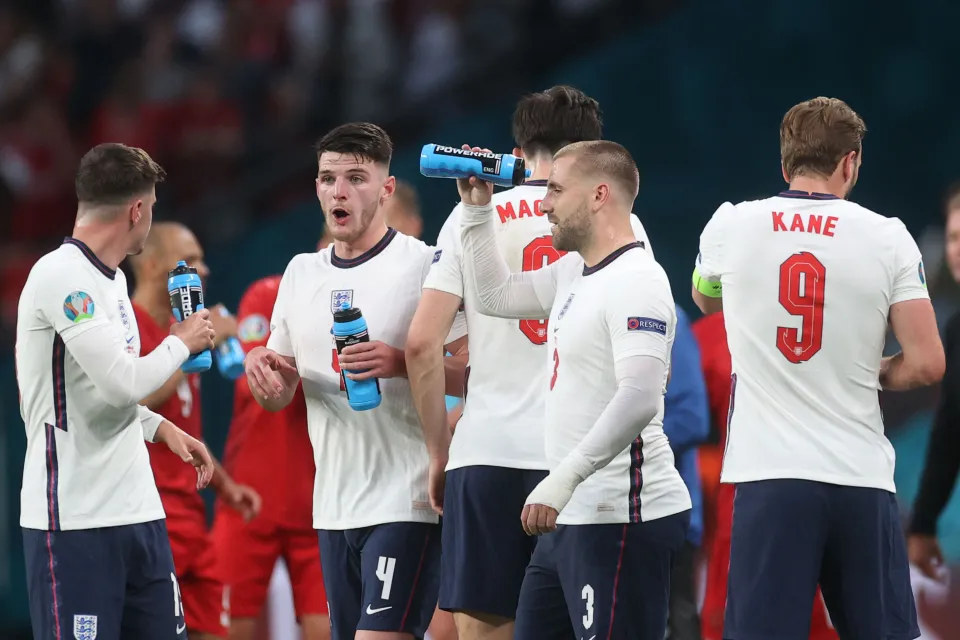
The 2026 World Cup will implement a mandatory three-minute hydration break at the 22nd minute of each half, regardless of temperature or weather conditions, to safeguard player welfare.
The World Cup 2026 will introduce a 3-minute break, mandatory regardless of weather conditions.
It marks the first time in the history of football’s most prestigious tournament that such a measure will be universally enforced across every match.
World Cup 2026 Tickets Guide: How & When to Buy
The expanded edition of the tournament — organised by FIFA — will not only feature 48 teams and a record 104 matches, but will also introduce a structural adjustment to the rhythm of the game itself.
FIFA World Cup 2026 Hospitality Packages Revealed, Here’s What’s on Offer
Scheduled to run from 11 June to 19 July 2026 across the United States, Canada and Mexico, the tournament spans three nations with significant climatic and geographical variation. With this ruling, matches will effectively be segmented into four phases rather than two continuous halves.
- No Commentson 7 Group Stage clashes to watch at 2026 World Cup
- FIFA World Cup 2026: FIFA unveils cutting-edge offside technology
World Cup 2026: From Climate Response to Tournament-Wide Policy
Historically, cooling breaks were only activated when temperatures exceeded safe thresholds — typically around 32°C. During the FIFA Club World Cup 2025, hydration pauses were introduced only in extreme heat conditions, at times surpassing 38°C.
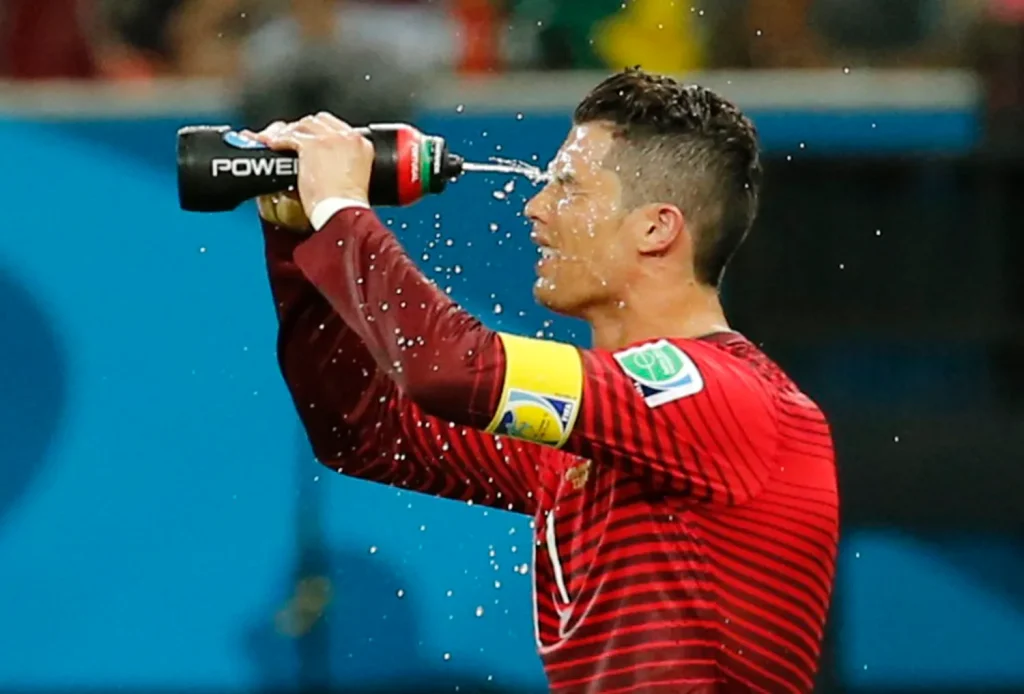
Images such as Cristiano Ronaldo splashing water over his face during the FIFA World Cup 2022 became emblematic of the physical strain imposed by intense heat. Likewise, players competing at the Club World Cup were seen using ice towels and aggressive cooling methods simply to maintain performance levels.
Benfica forward Andreas Schjelderup admitted he had never experienced such extreme playing conditions, while Chelsea’s Enzo Fernández reportedly suffered dizziness severe enough to require treatment on the pitch. Combined with scientific reports warning of “extreme heat stress” risks, such evidence prompted FIFA to adopt a proactive rather than reactive stance.
Hydration breaks have been part of World Cup regulations since 2014, but never as a fixed and mandatory interruption across all fixtures irrespective of environmental factors.
A recent “Pitches in Peril” report conducted by Football for the Future and Common Goal highlighted that 10 of the 16 venues for 2026 fall within zones classified as high risk for extreme heat stress during North American summer months. Against the backdrop of accelerating climate change, standardising breaks rather than relying solely on temperature readings is seen as a long-term preventive strategy.
Tactical Impact: The Era of the “Micro-Break”
From a purely footballing perspective, this decision will inevitably reshape match tempo. England head coach Thomas Tuchel previously warned that high pressing intensity and explosive sprint frequency decline markedly in extreme heat. He even suggested the possibility of substitutes remaining inside the dressing room to preserve energy before entering the field.

These three-minute intervals are not merely hydration pauses; they function as tactical micro time-outs. Managers gain an additional structured window to recalibrate pressing schemes, adjust defensive lines, or alter build-up patterns should physical fatigue become evident.
In modern football — increasingly defined by data metrics and high-intensity output — fragmenting match flow may help maintain technical quality across 90 minutes. However, it could also disrupt the natural rhythm that has historically defined World Cup football.
Commercial and Broadcast Considerations
Commercial realities cannot be ignored. The 2026 edition represents the largest World Cup ever staged, accompanied by unprecedented broadcasting and sponsorship revenues. Fixed three-minute breaks naturally provide additional advertising inventory and structured broadcast intervals — an attractive proposition for global rights holders.
From a governance standpoint, FIFA has described the policy as a “simplified and streamlined” evolution of previous cooling protocols. By applying the measure universally rather than conditionally, the governing body aims to eliminate controversy and ensure competitive equity.
The 2026 tournament will also introduce enhanced semi-automated offside technology, further underlining FIFA’s broader commitment to modernisation.
A World Cup Defined by Adaptation
Projected average summer temperatures for 2026 remain moderate on paper: approximately 20°C in Canada, 13–24°C in Mexico, and 23–28°C across much of the United States — though southern venues may reach 32°C. While not extreme by historical standards, the compressed schedule of 104 matches elevates recovery management to a strategic variable.
World Cup 2026, therefore, is not merely an expansion in scale; it is a test of elite football’s capacity to adapt — to climate realities, commercial imperatives, and evolving player welfare standards.
Three minutes per half may appear a minor administrative detail. Yet on football’s grandest stage, marginal adjustments often carry decisive consequences.
